Showing posts with label CLAIRE. Show all posts

Saturday, April 27, 2013

Real Photo Postcards


Real Photo Postcards: Snapshots of Social History

"Even the humblest material artifact, which is the product and symbol of a particular civilization, is an emissary of the culture out of which it comes"- T.S. Elliot


A Brief History of Postcards


The first postal card was issued on October 1, 1869 by the Austro-Hungarian post office. It was made of thin card stock and measured 8.5 x 12.2 cm. The card consisted of a decorative frame on the front, and a blank space on the back for the user to write a message. The popularity of the postal card was immense; an estimated nine million cards were sold during the year of its creation. 

Literature on postcards explains that there is a difference between “postal cards” and “postcards.” Postal card is the term typically used for government issued mailing cards, while postcards were produced privately. Pre-stamped postal cards were issued by the United States Postal Service in 1873, until the Private Mailing Card Act was passed in 1898, which allowed for the private production of cards. “Private Mailing Card” was required to be written on these cards, because they were not produced by the USPS. At that point, only the government was allowed to place the word “postcard” on cards. 

Cards printed by private producers were described with such terms as: souvenir card, correspondence card, mail card, or the aforementioned private mailing card. The "undivided back" postal card replaced the private mailing card in 1901. This card, issued by the United States Post Office insisted that the back of the card could only hold the address of the recipient. In 1907, the "divided back" postal cards were put into circulation, which allowed for consumers to write a personal message along with an address on the back. 

In the United States, postcards were in circulation as early as the 1860s. The first patented American postcard was issued by John P. Charlton in 1861, and the rights were later sold to H.L. Lipman. The first non-Postal card (as mentioned above : meaning privately made postcards where postage was applied by the consumer) was introduced in 1869, in Austria. By December of 1901, the United States Post Office allowed for the printing of the words “Post Card” on the back of cards which were privately printed. These postcards were traditionally categorized as: real photo, lithographed, and special cards. They could be made of any material that could be mailed. 

Precursors to Real Photo Postcards

A few photographic formats can be considered early ancestors of the real photo postcard, though they were somewhat different (the fact that they were mailed inside an envelope), including carte de visites and stereographs. 

There are two specific instances in which earlier postal cards can be considered the precursor to real photo postcards. These examples are described by Robert Bogdan and Todd Weseloh in their book, Real Photo Postcard Guide: The People’s Photography. According to Bogdan and Weseloh, some photographers printed images by using the non-address side of postal cards after coating it in a light sensitive emulsion. The other example they gave was of a postal card (U.S.) mailed in 1874 which had the photograph of a child who had been kidnapped glued to the blank side. The card also contained information about the kidnapping, and claimed that a reward would be given to those with details about the incident. 

Picture Postcards and Real Photo Postcards

There are two different types of picture postcards. The first is the printed card, which are mass-produced “mechanically from plates or screens on printing presses.” Real photo postcards, or RPPCs, are real photographs “produced from a negative chemically on photographic paper with postcard backs.” 


“Genuine photo,” or “actual photo” postcards were made directly from a negative on paper that had been sensitized. This paper was available through photographic suppliers and dealers. Some people even sensitized the paper themselves, in the comfort of their own homes. There were several different processes used in the printing of the real photo postcards, such as collodion, cyanotype, and albumen. The most popular process was the silver gelatin. Most real photo postcards were created in black and white, but were often hand colored. 

The first documented photo postcard was mailed in 1899, but didn’t gain much popularity until a few years later when Kodak started selling photo paper along with a pre-printed postcard. The Kodak Company also produced models of Kodak "postcard" cameras in 1906, which created negatives the size of postcards. The outcome of using such a camera were clear, crisp images. Another feature of some of these cameras was that the photographer could write a caption or comment on the negative itself by lifting a tiny thin door at the back of the camera body. This user-friendly camera and paper made sending postcards extremely personal. It was also fast and affordable, so the average person could create postcards to their heart’s content, without spending too much time or money.

Many real photo postcards are confused with photochrome cards, which were introduced in 1934. Photochrome cards look like color photographs, but they were created through a color printing process which used lithography techniques. The two can be identified by using a magnifying glass; real photo postcards have a smoother gradation of color and form, and photochromes contain tiny dot patterns. 

I was inspired to research real photo postcards because I had received two as a gift recently, and was curious about their origins. I found some background information on a wonderfully informative website called Metro Postcard. They have put together a list and descriptions of the many postcard artists, studios, and distributors. I was able to find information where at least one of my postcards came from by matching the little logo in the corner of the image to one on the website. 
The postcard came from the Noyer Studio in Paris, France. The photographer responsible for the images was Alfred Noyer, who was in charge of production from 1910 until the 1940s. Noyer was a member of the Salon de Paris, and he photographed paintings for the Salon, to be used in the creation of art carts. The website states that Noyer’s earlier cards were photo reproductions of artworks which were printed in halftone lithography. Noyer was also known for creating illustrated photo cards depicting World War I, which tended to be of the patriotic persuasion. The postcard I received, according to this website, is from the 1920s. Noyer had begun to produce cards with nude women, or women in risqué poses. He also produced hand colored images of children at the time. 
Noyer Postcard I was given


 Real Photo Postcards: Snapshots of Social History

One of my favorite Real Photo Postcards, Germany 1932


The popular saying is that "a picture is worth a thousand words," and this holds true for real photo postcards-that is, they are representations of social history without any actual words. They can relay many aspects of social history and change. Through studying these photo postcards, viewers can gain a sense of what was popular during a certain year, in a certain location, to people of all different sorts. For example, there were many postcards of vacation spots and historical monuments and landmarks. Obviously, these destinations were popular, and people were buying the postcards to collect as souvenirs, or to give as gifts to friends and family. 

Postcards from the past can be viewed side by side with postcards being produced today, to observe differences in clothing, architecture, advertising, and hair styles, to name a few. Recurring themes in the past may not be the same as recurring themes in the future. For example, postcards sent as propaganda were popular during wartimes-not so much in the present. 


Sources

http://www.weirsbeach.com/Largejpgs/postcardhistory.html

http://www.pdxhistory.com/html/post_card_history.html 

http://www.metropostcard.com/publishersn.html -Noyer photos also from this site

http://www.notesonphotographs.org/images/e/ec/Ania_Michas_Report_small_for_web.pdf


Friday, April 12, 2013

Lennart Nilsson, Drama of Life Before Birth, 1965

Lennart Nilsson, Drama of Life Before Birth, 1965


The photograph of an 18-week-old human fetus appeared on the cover of LIFE magazine on April 30, 
1965. It was taken by Swedish photographer Lennart Nilsson, among other images detailing the stages 
of human reproduction from fertilization onwards. The photographs are visually breathtaking, detailed 
and in full color. 

According to the biography on his website, Nilsson began as a photojournalist around the mid-1940s. 
After publishing several photo essays, in 1953 Nilsson brought a few photos of the human embryo with 
him to New York. Nilsson was then encouraged to document the “origins of man,” thus the article in 
LIFE magazine was published. Nilsson also had a book titled “A Child is Born,” published during the 
same year (1965). In the following years, Nilsson had a few more stories published in LIFE, including 
one on the heart and heart attacks, and the brain. 


Once the photographs were released, many people questioned how Nilsson could have possibly 
captured such images. To take these photographs, Nilsson experimented with thin endoscopes and 
macro-lenses which allowed for detailed images that captured even the blood vessels of the fetuses and 
embryos. Magnification was made possible by scanning electron microscope technology. 


Although many were awestruck by these powerful images, others had their doubts. Many people were 
led to believe that all of the fetuses and embryos in Nilsson’s photographs were taken in utero, by the 
article in LIFE, which insisted the fetus was living. In reality, a majority of the fetuses and embryos had 
been aborted, or failed to live much longer after the photographs were taken. The aborted embryos and 
fetuses gave Nilsson the opportunity to find the best lighting and positions, including placing the thumb 
of one fetus in its mouth. The posing of the fetuses in Nilsson's images can be compared to the staging of other famous photographs, yet it didn't seem to be his intention to create the notion that the fetuses were alive at the moment the photos were taken. 


Almost immediately after the publication of Nilsson’s LIFE photo essay, his images were being used by 
many anti-abortion/pro-life groups everywhere. Activists were using these images to champion a cause, 
refusing to believe the actual status of the fetus in the photographs. In an article about Nilsson on 
LifeSiteNews.com, President of American Life League Judie Brown states, “...a picture is worth lives, 
untold numbers of lives, because those pictures humanize the child in utero.” Continuing to use 
Nilsson’s photographs, even if the pro-life groups know that they are most likely aborted fetuses and 
embryos only makes sense because the images are so powerful. 


While gaining support and praise from pro-life groups, Nilsson’s photographs also paved the way for 
advanced ultrasound technology. This includes the 3D and 4D ultrasound images available today, 
which allows the parent(s) to have a realistic, moving picture of the child in the womb. While the war 
between pro-life and pro-choice groups continues, and despite the controversy behind Nilsson's 
photographs, there is no denying the effect they have had on the lives of many, and today's technology. 


Friday, March 29, 2013

Museum of the Rockies Photo Archive


   Museum of the Rockies Photo Archive 


The Museum of the Rockies located in Montana houses collections of dinosaur fossils, American Indian history, and a living history farm. A brief description of the photo collection is easily located under the “Collections” tab in the main toolbar. 


The photo archive at MOR contains photographs pertaining to the Northern Rockies Region of Montana, Idaho, and Wyoming. The entire holdings of the Photo Archive consist of over 80,000 photographs. Subject matter of the photographs include Yellowstone National Park, railroads of the northwest, farming and ranching, regional industries, and people and events. The archive also contains photography collected from local and regional photographers. Clicking on the “Photo Archive” link brings the viewer to the online searchable archive. 


Aesthetically, the style of the archive could be updated, but the search and browse options almost make up for the stylistic weaknesses. On the left side of the page there is a large tool bar. Users can search the archive by subject, location, date, surname, photographer, or by text and catalog number. There is also the option of browsing by collection. 


To begin, I clicked “by Subject” underneath the “Image Database Searches.” Following the click, I was shown a lengthy alphabetized list of subjects, ranging from agriculture to the YMCA. 


I chose “cowboys,” and the search turned up one photograph:


The description contains a title, date, location, photographer, format, source, rights, and catalog number. The title is accurate, “C.W. Whissman on Horse, Harlowton, Montana.” The photo description goes into further detail, describing the type of horse. Clicking on the actual image maximizes for better viewing, and more details about the photograph can be seen, such as subject headings and the surname. 


Next, I decided to browse by collection. I randomly clicked on the “info” link next to the  Lamme Collection. A brief description of the collection provided important background information to the collection. The Lamme Collection consists of more than 300 original 5 x 7 inch glass plate negatives which were taken by Maurice Allison Lamme between 1897 and 1910. The information provided is mostly biographical, but useful because a large number of the photographs were of Lamme’s friends and family members. 

Browsing the actual collection is neat because the image is provided along with the catalog information. Each description on the results page contains elements such as: title, date, location, photographer, format, source, rights, and catalog number. As mentioned previously, once a photograph is selected, information such as subject headings and surnames is provided. 


I had a problem with some of the descriptions and titles. Some photographs possessed clear and self-explanatory titles and descriptions, while others were very vague. For example, one description states, “Foster Camp, Middle Creek (Hyalite Creek) Hyalite Canyon, Montana. Vintage 5x7 glass negative, 5x7 in. copy print.” If the image was not provided, I wouldn’t have known there were people in the photograph. This is the case with quite a few of the descriptions, where the title of the photo is the exact same as the description field. 


Some of the photographs have longer descriptions, but rather than just describing the visual aspects of the photo, provide context for the image. For example, this photograph of the Julie Martin Residence:


All of the photos in this collection have “image/jpeg” as their format, which makes sense because it is the online photo archive of their physical archive. The original format is provided under the “description” field of each photo. In the case of the Lamme collection, all images are photographic prints from 5x7 glass negatives. A large number of the images are labeled “copy prints.” 

I wanted to see how other collections were described in terms of format, so I clicked on “Other Photo Archive Collections.” The first page of results brought a variety of formats. Some images just say “black and white photo,” which is fine except that could mean a variety of things. There are a large number of images which just say “print” on them, which isn’t very descriptive either. Stereograph showed up several times, along with albumen prints. One image was described as a “card photograph.” 

Despite the variety and somewhat vague descriptions of format and descriptions of what a photograph consists of, the MOR does a wonderful job of providing a consistent formula for photographic description. 

reference: http://www.morphotoarchive.org/info.php
                 http://museumoftherockies.org/Collections/PhotoArchive.aspx


Friday, March 1, 2013

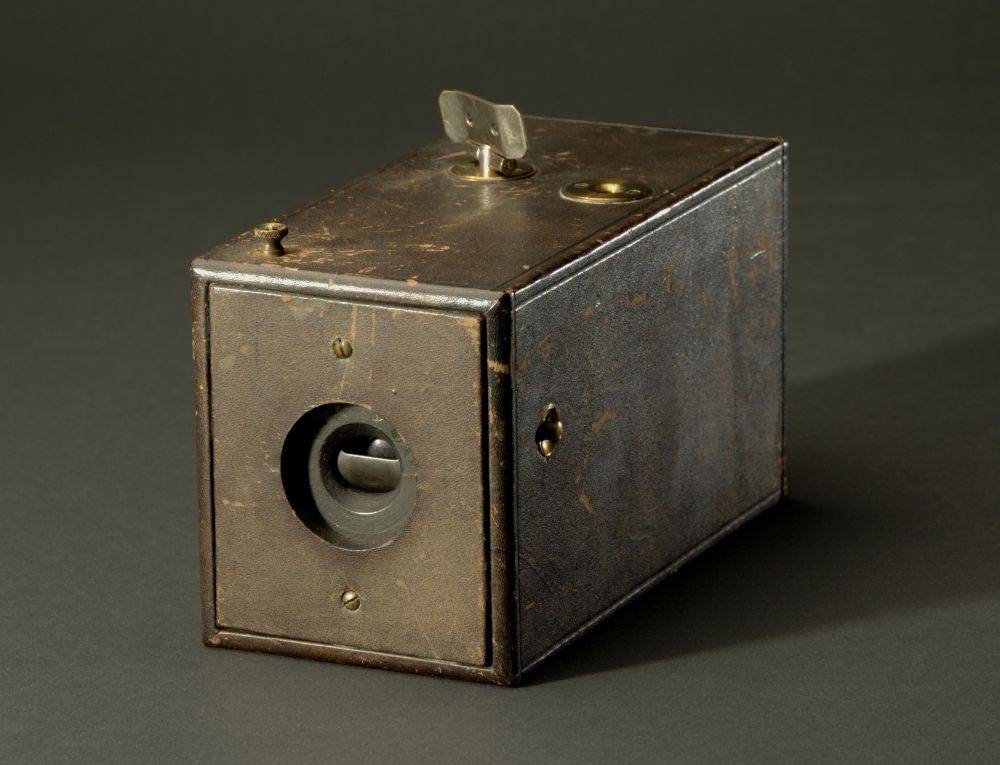
Cellulose Nitrate Film and the Kodak Camera


“You press the button, we do the rest.” 

In 1885 George Eastman marketed the first transparent photographic "film," which was flexible and easily wound onto a spindle. This film was created by coating the photographic emulsion on paper and then loading the paper in a roll holder. Because the grain of the paper was often transferred onto the photograph, Eastman searched for a better carrier of the emulsion. The solution came in the form of a soluble gelatin, which would coat the paper. The gelatin would then be covered with a layer of insoluble gelatin, which was light-sensitive. Once exposed and developed, the gelatin was pulled from the paper and moved to a sheet made of clear gelatin. The sheet was then finished with collodion, which made the film durable, yet flexible. This became the first commercial transparent roll film, released in 1889. The method of using film replaced the complicated process involving all of the chemicals, tanks, and plate holders which was only available to professionals and those seriously interested in the process of photography. 


The development of the roll film allowed for the Kodak camera to be placed on the market in 1888. The camera came pre-loaded with enough film for 100 exposures (200 feet of film!), but still compact enough to carry around. Once the user had taken all the shots, the camera could be taken to the Kodak company in New York. There, the film was developed and prints were made. Kodak then replaced the film, and returned the camera to the owner. The Kodak camera was appealing to the middle class because of its fairly low cost and the ease of use. 


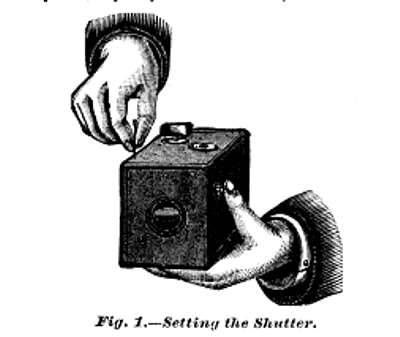
To use the camera, there were three easy steps:

1. Turning the key to wind the film


2. Pulling the string to set the shutter

3. Pressing the button to take a photo


For many, the Kodak camera made the process of taking photographs simpler. The simplicity of the camera and the extensive marketing done by the Eastman-Kodak company made photography popular and accessible to amateurs; photography was made into an “everyday affair.” 


The popularity of the Kodak was so great, that users were getting in trouble for taking photographs they shouldn’t be. Kodaks were banned from some beaches after the “camera fiend” was caught trying to take photos of women in their bathing suits. Others were afraid they would be caught on camera looking ridiculous, but that was the goal for many people. The Kodak could capture the spontaneity of the moment, compared to the seriousness and stillness of the wet-plate predecessors. After the film camera was released in 1888, many soon followed, allowing for the further spread of amateur photography. 

References:


Lemels N-MIT, "Inventor of the Week Archive: Dry, transparent, and flexible photographic films."


NNDB, "George Eastman." 


Patent Plaques, "Invention of the Roll Film Camera: You Press The Button, We Do The Rest


PBS, "The Kodak Camera Starts a Craze."


Wired.com, "September 4, 1888: Photography Leaps into the Late 19th Century.


Saturday, February 16, 2013

Appraisal


Appraising photographs can be a challenging task. There are many important things to consider when doing so, some more important than others. One of the most important aspects to consider is whether or not the photograph(s) fit with the existing collection(s). Having a well-defined collection policy can make the task a bit simpler, and help the archivist determine if the photographs would be a good fit for the collection. The photographs should contribute to the mission and purpose of the institution, and not just be accessioned because of potential value. 

Provenance and chain of custody are extremely important in determining the fate of photographs in the appraisal process. Without a clearly defined provenance or chain of custody record, it is difficult to determine the authenticity of a photograph. Also, candidate photographs can share a provenance with other records or photographs held by an institution, so having this information can make the appraisal of photographs easier on the archivist. 

Another important aspect of appraisal is the potential functional value and usability of the photographs. Would it be worth it for an institution to collect photographs that aren't going to be used by their audiences? Also, if the photographs aren't in the best condition, would it be worth it to collect them with the cost of preservation? These factors must be taken into consideration, and weighed carefully. The user groups must be defined and studied in order to determine if certain photographs will be used. 

The ideal photograph for an institution to acquire would be one that fits the collection policy, has a clearly defined chain of custody and known provenance, is in good condition (leading to low preservation costs), and will be appreciated and used by the institution's audiences. 

Friday, January 25, 2013

France, WWII Liberation


 Creator: Robert Capa
     Title: FRANCE. W.W.II. Liberation of France by the Allied Troops
     Date: 1944
     Collection: Magnum
     Description: Taken during De Gaulle's speech, after the liberation of the city (Chartres), on August 23rd, 1944. In the previous month, the Allied forces had opened a second front in Normandy, in an attempt to liberate France.

I chose this photo because I have always been interested in WWII, most especially the role of France. I love the expression of the little boy, it's almost as if he doesn't care that he's getting his photo taken as he's picking his nose.